

Editor’s Note: This guide was originally published in 2015 and has been fully updated with 2025 insurance industry standards and Central Bank of Ireland terminology.
When insurance companies write to you, they often use “legalese” that assumes you have a complete understanding of industry terminology. At Claims Assist – Insurance Loss Assessors, we translate these terms into plain English so you can manage your claim with confidence.
Frequently Asked Questions
1. What is the “Condition of Average” in Irish insurance?
This is the most common reason for reduced payouts in Ireland. Average applies if you are under-insured. If your property is insured for only 80% of its true value, the insurer will only pay 80% of your claim—even for small losses.
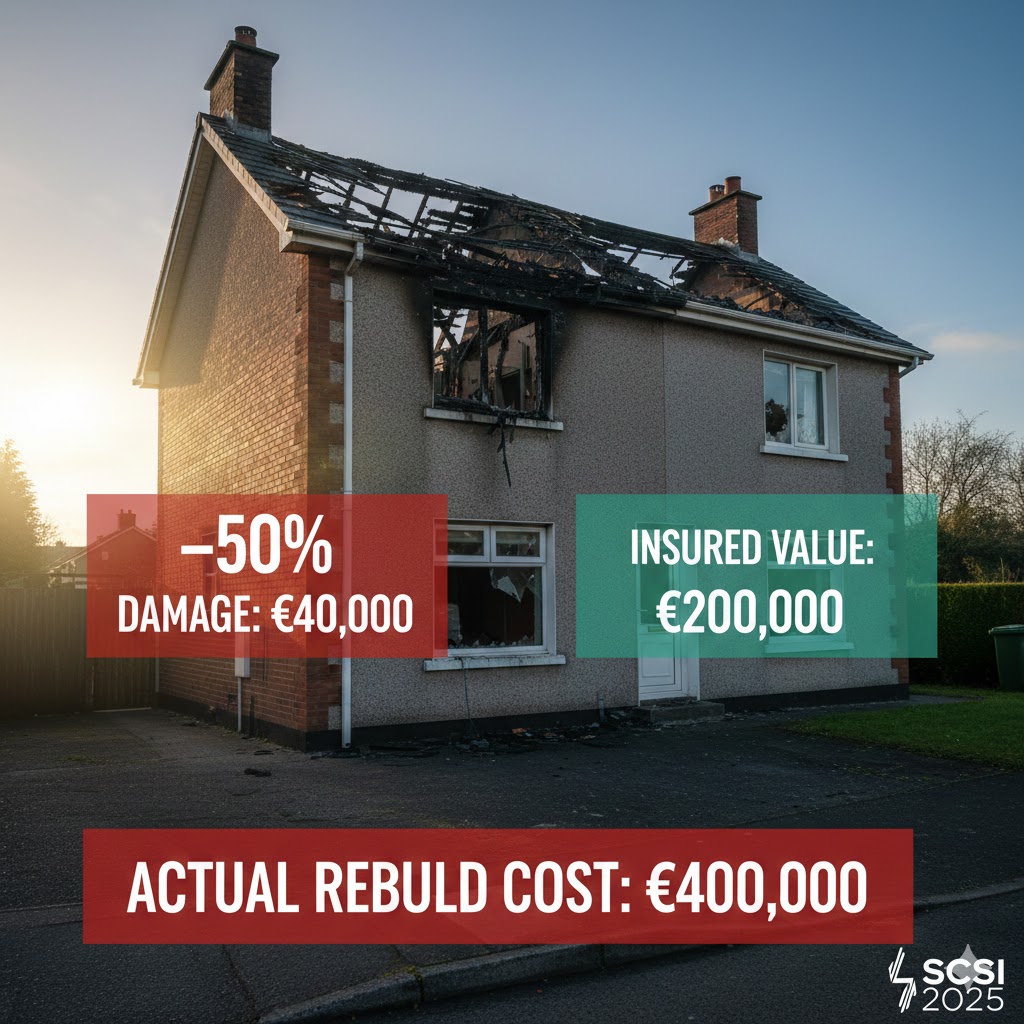
Example: How a 50% under-insurance gap results in a €20,000 loss on a €40,000 claim.
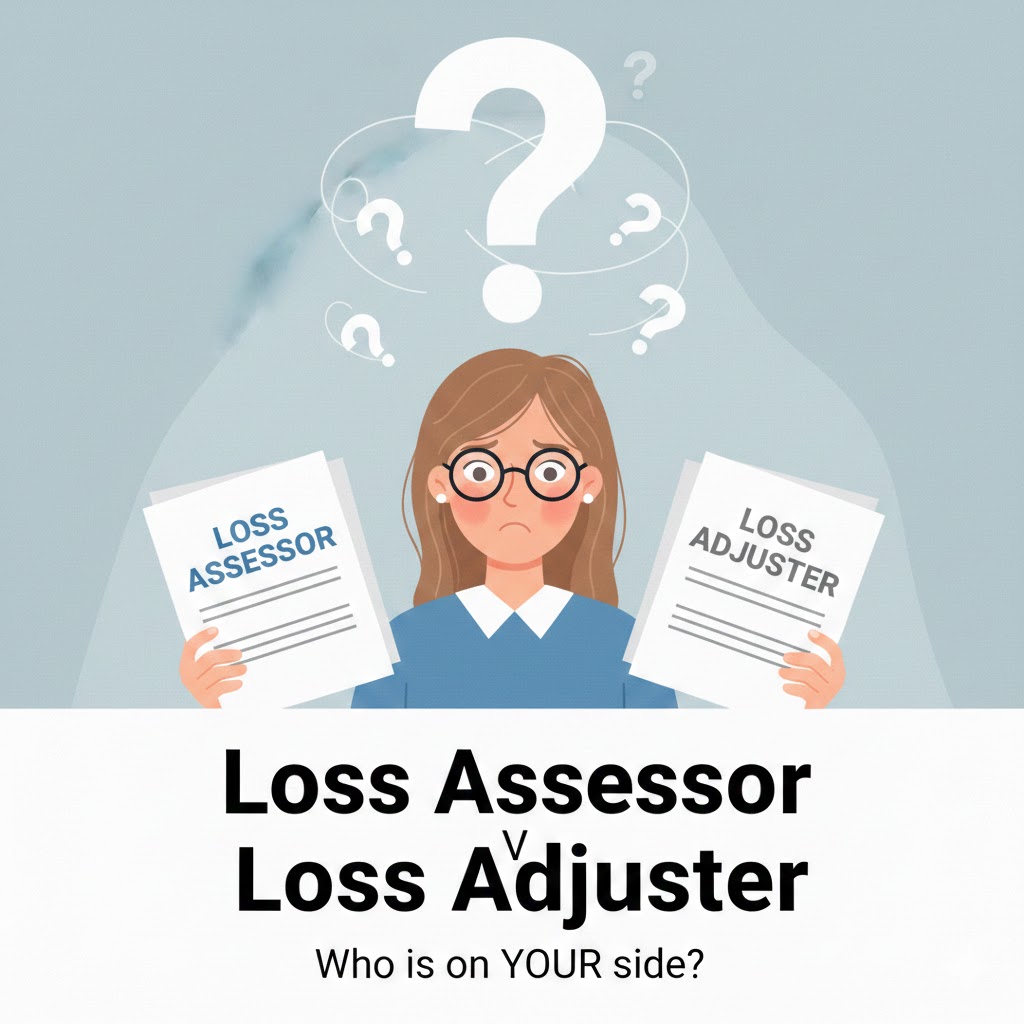
2. What is the difference between a Loss Adjuster and a Loss Assessor?
This is the most critical distinction for a claimant:
-
Loss Adjuster: Hired and paid by the Insurance Company to protect their interests.
-
Loss Assessor: Hired and paid by You (the policyholder) to ensure you get your full entitlement.
3. What does “Indemnity” mean in a property claim?
Indemnity is the principle of putting you back in the same financial position you were in before the loss. Unlike “New for Old,” an indemnity settlement will deduct for wear, tear, and depreciation based on the age of the items.
4. Is my house “Beyond Economic Repair” (BER)?
In the insurance world, BER means the cost of repairing your property or items exceeds their actual market value. If this happens, the insurer will usually offer a cash settlement for the “market value” instead of authorizing repairs.
A-Z Glossary of Common Terms
Accident: An unplanned, sudden event that results in loss or damage.
Business Interruption: Insurance that covers lost profits and costs if an event like a fire or flood forces your business to close.
Certificate of Insurance: A summary document of your cover. Note: It doesn’t always show the full “Exclusions” found in the main policy document.
Excess: The amount of a claim that you must pay yourself (e.g., the first €250 or €500).
Exclusion: A specific situation or type of damage (like “wear and tear”) that your policy does not cover.
Gross Profit: As defined by insurers: Sales minus purchases, adjusted for stock. This is vital for Business Interruption claims.
Premium: The price you pay for your insurance cover.
Sum Insured: The maximum amount your insurer will pay. If this is too low, the Condition of Average will apply.
Wear and Tear: The natural aging of property. Most standard policies deduct for this unless you have a “New for Old” agreement.
Get Expert Representation Today
Understanding these terms is the first step, but negotiating with a multi-billion euro insurance company is the second. Don’t go it alone.
Contact Claims Assist – Insurance Loss Assessors at 0818 929 555 for a professional consultation. We represent homeowners nationwide to ensure the jargon doesn’t stand in the way of your full settlement.