
Published: October 23, 2024 | Last Updated: January 2026
Stressed by a recent chimney fire or worrying about structural damage? You don’t have to deal with your insurance company alone. While insurers often look for reasons to minimize payouts, we act as your expert advocate to ensure you get a fair settlement that covers all your repair costs.
Need professional help with your claim? Contact our loss assessment team today: 0818 929 555
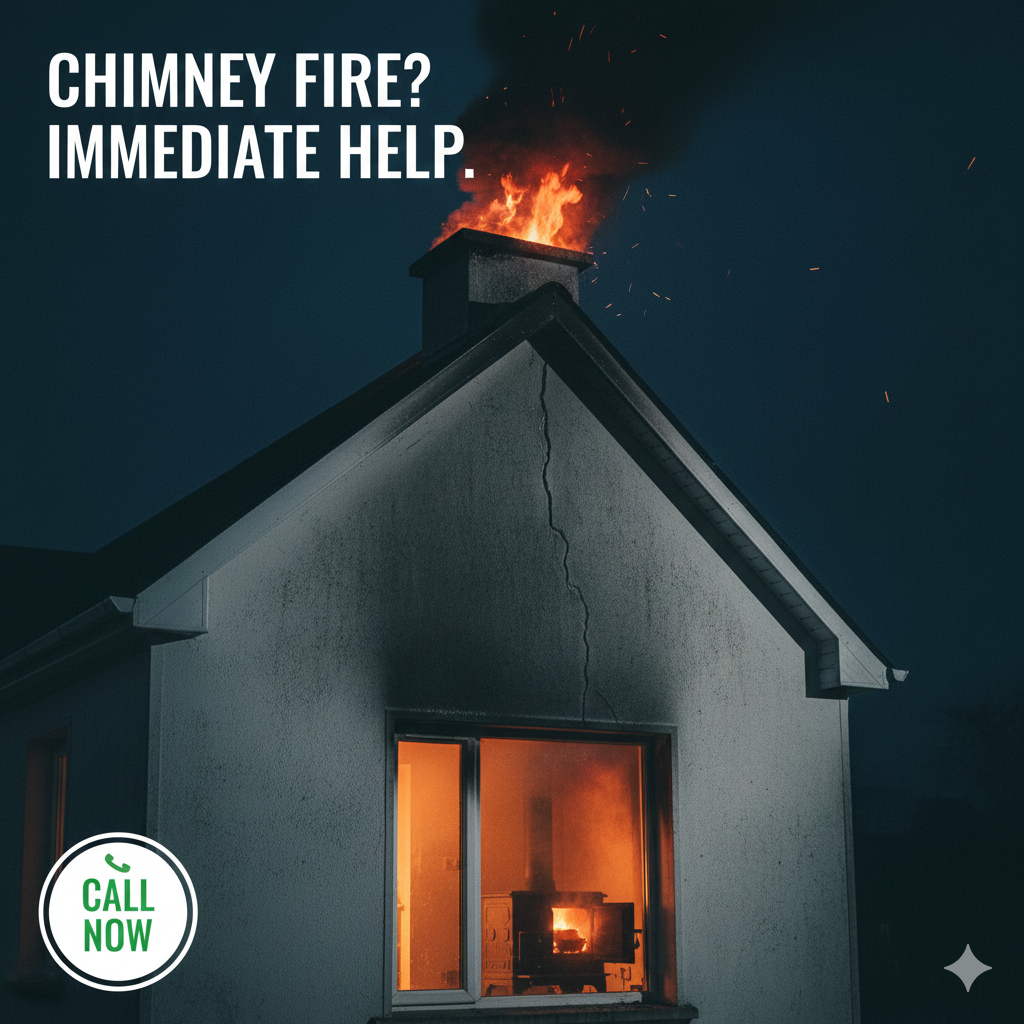
If you have discovered a crack in your chimney breast or have just experienced a frightening chimney fire, your first thought is likely: “Does my home insurance cover chimney damage?”
The answer depends largely on the cause of the damage. In Ireland, the Fire Services attend approximately 2,000 domestic chimney fires every year. You can view the latest National Fire Statistics here.
If you are one of them, navigating the insurance claim process can be daunting.
As professional Insurance Loss Assessors & Expert Quantity Surveyors, we frequently help homeowners with claims involving:
-
Cracked chimney liners after a fire.
-
Chimney repair costs following storm or lightning damage.
-
Structural damage caused by high-intensity heat.
Common Signs of Chimney Damage
Many homeowners don’t realize they have a problem until they see physical symptoms. If you notice any of the following, you may have a valid insurance claim:
-
Debris: Sand or mortar falling into the fireplace or stove.
-
Staining: Brown or black staining on chimney breast walls, ceilings, or attic blockwork.
-
Dampness: Flaking paint or wet patches on bedroom walls near the chimney.
-
External Cracks: Visible cracking on the chimney stack above the roofline.
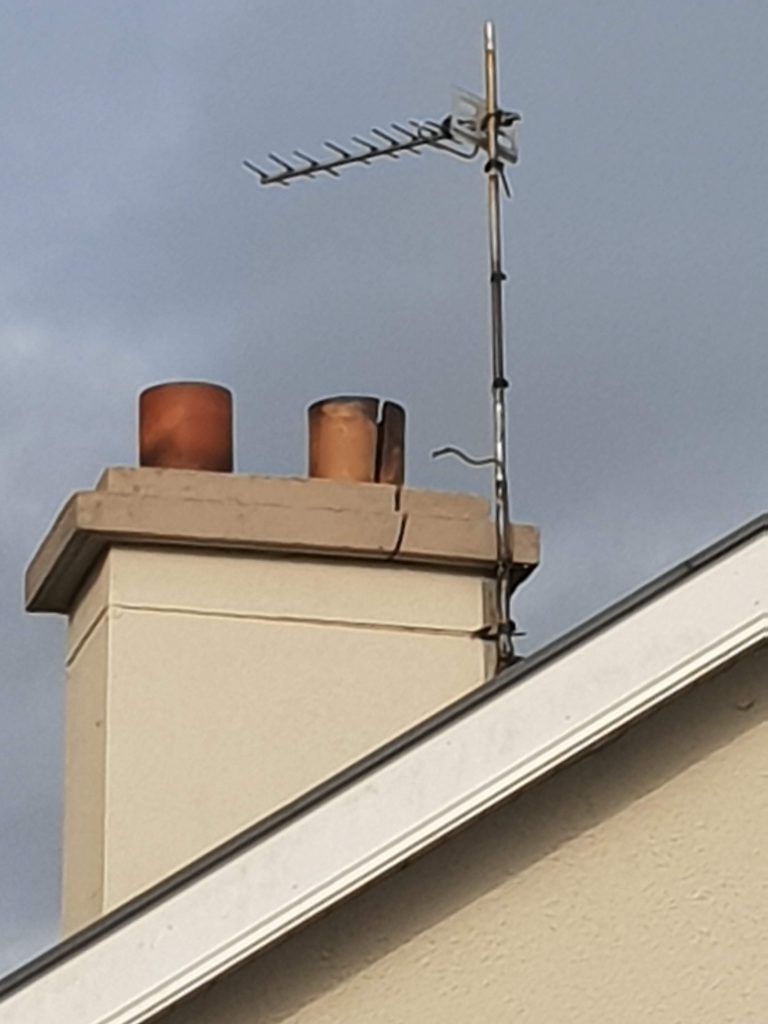
Cracked Chimney after Fire Damage
What Does Home Insurance Usually Cover?
A standard Irish home insurance policy covers your chimney for specific “insured perils.” Generally, you are covered for a sudden event such as a:
Fire Damage: Including both free-burning and slow-burning chimney fires.
Storm Damage: Structural damage caused by high winds.
Lightning Damage: Direct strikes that crack the stack or liners.
What is Excluded?
Insurance is designed for “sudden and accidental” events. Claims are often rejected if the damage is caused by:
-
Wear and Tear: Gradual deterioration over many years.
-
Faulty Workmanship: Poor installation of stoves or liners.
-
Lack of Maintenance: Many insurers now require proof of professional cleaning (receipts from a registered chimney sweep) to pay out on a claim.
The Two Types of Chimney Fires
Not all chimney fires are the same, but both can cause devastating structural damage.
-
Free-Burning Fires: These are loud and dramatic, often sounding like a “freight train” in your living room, with visible flames and billowing smoke.
-
Slow-Burning Fires: These are “silent killers.” They burn at extremely high temperatures but are less visible. You may not even know a fire occurred until you see cracks in your flue liners during a CCTV survey.
Pro Tip: If you have an active fire, call 999/112 immediately. The Fire Brigade invoice is usually covered by your insurance policy as part of the claim.
Stoves vs. Traditional Chimneys
During the “Celtic Tiger” era, many stoves were fitted into original 8-inch clay liners. Because stoves burn at a much higher intensity (up to 65% efficiency compared to 10% for open fires), these old clay liners often crack and shatter under the heat.
If you are replacing a damaged chimney, we highly recommend a flexible steel liner or a rigid steel liner. They are designed for high heat, improve stove efficiency, and significantly reduce the risk of future flue damage.
How to Make a Successful Chimney Insurance Claim
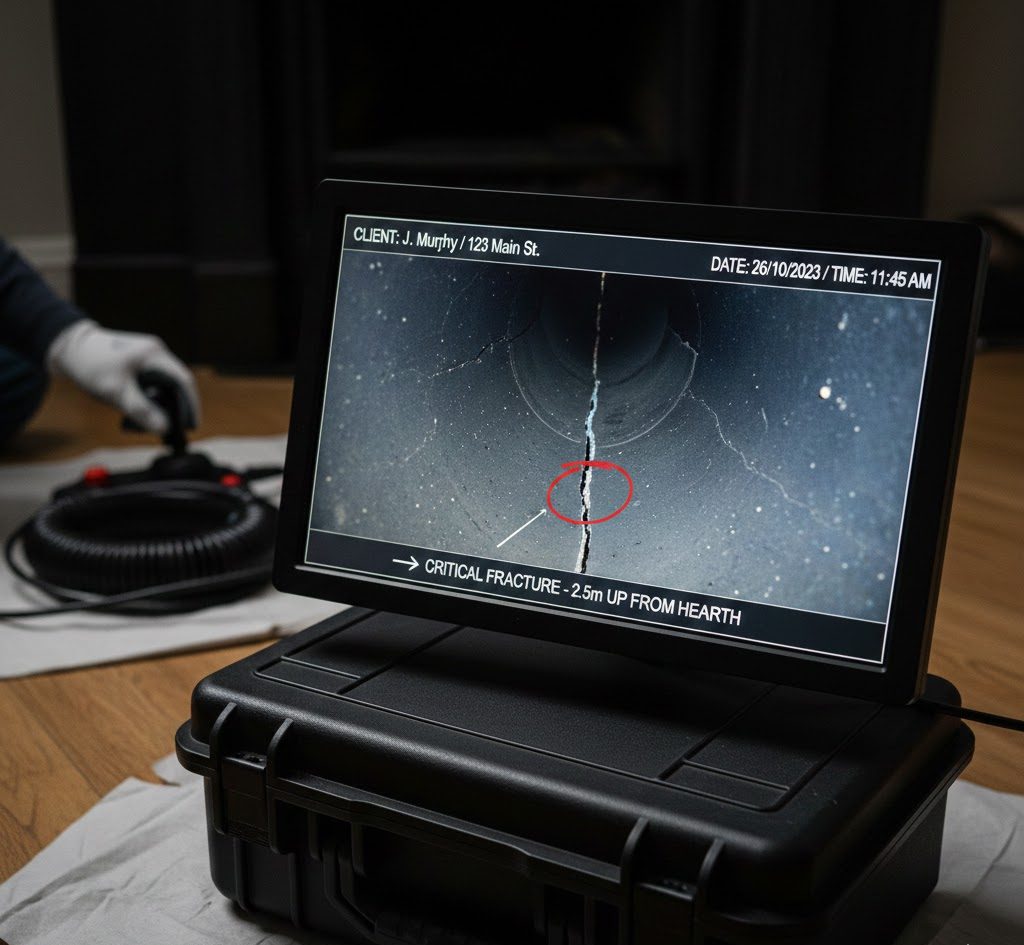
Professional CCTV surveys provide the essential evidence needed to prove chimney fire damage to your insurance provider.
To successfully claim for chimney damage, you must provide definitive evidence that a sudden event occurred. Additionally, the most effective way to establish this is through a professional CCTV chimney survey insurance claim report, which identifies structural fractures that a standard inspection might miss. Liability can be established by;
-
A Chimney CCTV Survey: This is the “smoking gun” evidence that shows cracks in the internal flue.
-
A Fire Brigade Invoice or Report: If they attended the scene.
-
A Professional Assessment: This is where a Loss Assessor is vital.
Why Use a Loss Assessor for Your Chimney Claim?
The insurance company will send their own Loss Adjuster to limit their liability & reduce your claim payout. Claims Assist work for you. We ensure that the full extent of the damage is recorded and that you receive the maximum settlement to restore your home to a safe condition.
While some homeowners worry about the cost of professional representation, it is important to remember that a Loss Assessor’s fee is typically a small percentage of a much larger, successfully negotiated settlement. For a transparent breakdown of costs and commissions, view our guide on Loss Assessor Fees in Ireland. In most cases, the increase in the settlement amount far outweighs the professional fee, making it a vital investment in your property’s repair.
Need Help With a Chimney Claim?
Don’t settle for a rejected claim or an undervalued payout. If you suspect you have chimney damage or have recently had a fire, contact our expert team today.
The Chimney Fire Insurance Claim Checklist
If you have just experienced a chimney fire or discovered damage, follow these steps to protect your insurance claim:
- Safety First: Do not use the fire or stove again until it has been professionally inspected.
-
Documentation: Take clear photos of any external cracks, soot staining, or debris in the grate.
-
Save Records: Keep the Fire Brigade invoice if they attended your home.
-
Maintenance Proof: Locate your last receipt from a registered chimney sweep to prove regular maintenance.
-
Professional Survey: Arrange a CCTV Flue Survey to identify internal liner damage that isn’t visible to the eye.
-
Expert Representation: Contact a Claims Assist Loss Assessor before speaking to the insurance company’s adjuster to ensure your interests are protected.
Call us now on 0818 929 555 for a professional consultation.
🚨 Don’t let the insurance company dismiss your claim as ‘wear and tear.’ Get expert help from a;