
Recently, our house fire insurance assessors were called to a property in Co. Limerick. The homeowners had been forced to call the fire brigade in the middle of the night after discovering flames and smoke spreading from their kitchen range.
The cause? A severe chimney fire that had been smoldering undetected for hours.
The Hidden Danger: Chimney Fires and Soot Build-up
In this instance, a build-up of soot in the void behind the kitchen range ignited. The intense heat eventually cracked the chimney flue, allowing extensive fire and smoke damage to spread throughout the kitchen and the rest of the house.
This is a typical example of a chimney fire insurance claim. Whether you are dealing with a partial loss or a total loss fire claim, the actions you take in the first 24 hours are critical to the success of your payout.
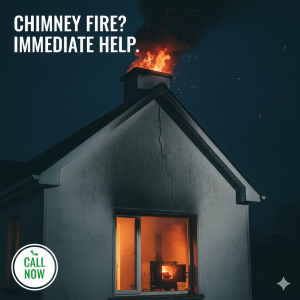
A chimney fire can cause sudden, devastating structural damage to your home’s exterior and interior.
Total Loss vs. Partial Loss: Every Second Counts
The homeowners acted correctly by notifying the fire brigade immediately and vacating the premises. While the Fire Services prioritize the protection of life, they also work to minimize property damage.
Quickly extinguishing a blaze is often the difference between a repairable house and a total loss claim. In this Limerick case, the fire services had to demolish part of the chimney breast to reach the source of the fire. While necessary, this structural damage added another layer of complexity to the insurance claim.
The House Fire Claims Process: How We Help
After meeting the homeowners, the Claims Assist team immediately took over the management of the claim:
-
Reporting the Claim: We notified the insurance company and handled all initial correspondence.
-
On-Site Meeting: We met the insurance company’s loss adjuster at the property to ensure all damage was recorded fairly.
-
Scope of Works: We negotiated and agreed upon a comprehensive repair schedule for the fire and smoke damage.
-
Alternative Accommodation: We ensured the homeowners were placed in suitable temporary housing while their home was being repaired.
Loss Adjuster vs. Loss Assessor: Who is on your side?
It is a common mistake to think the insurance company’s Loss Adjuster is there to help you. It is vital to understand the roles:
-
The Loss Adjuster: Paid by the insurance company. Their goal is to protect the insurer’s interests and minimize the payout.
-
The “Value at Risk” Survey: The adjuster will measure your home to see if you are under-insured. If you are under-insured by 30%, they will use the “Average Clause” to reduce your payout by 30%—even if the fire only damaged one room.
-
The Loss Assessor: That’s us. Claims Assist works solely for you, the policyholder. We act as your specialist representation to ensure you receive the maximum settlement allowed under your policy.
Expert Chimney Repairs & CCTV Surveys
For this claim, we brought in a specialist from Nationwide Chimneys to perform a CCTV chimney survey and relining. Determining the exact cause of the loss is a standard requirement for insurers before they authorize chimney insurance repairs.
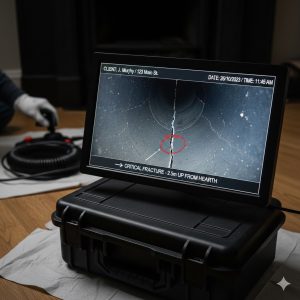
Professional CCTV surveys provide the essential evidence needed to prove chimney fire damage to your insurance provider.
Contact Your Local House Fire Assessors
If you have suffered a house fire, smoke damage, or an electrical fire, don’t face the insurance company alone.
Claims Assist – Insurance Loss Assessors provide a nationwide, ‘no-win, no-fee’ service. Whether you are looking for an “insurance assessor near me” or expert advice on a kitchen fire, we are here to support you from start to finish.
Call us now on 0818 929 555 for immediate assistance with your fire damage claim.